Source Square Fused Silica Crucible for Glass, Casting, Ceramic
Compare 30 square fused silica crucible options from verified Chinese manufacturers. These heat-resistant materials feature high purity silica powder and support applications in thermal analysis, gold melting, and semiconductor processes with customizable dimensions.
Key considerations
Products List


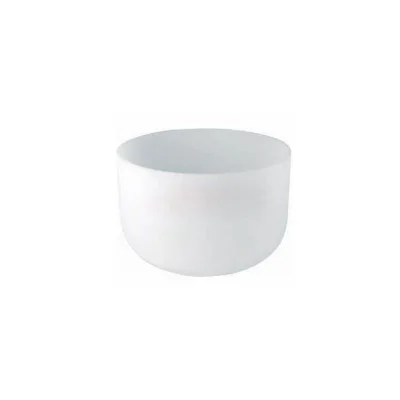

Comprehensive Sourcing Guide
Strategic Sourcing Guide for Square Fused Silica Crucibles
Understanding Product Variability and Core Specifications
When sourcing a square fused silica crucible, buyers must navigate a complex landscape where "square" is a specific geometric requirement that often contrasts with the more common cylindrical forms found in general inventory. The supplied product data reveals a diverse range of attributes that define the market, including various shapes such as "Crucible," "Round," "Cylindrical," and "Square" (implied by the core keyword). While the provided facts list specific models like "RY," "KGQ400," "GT-225," and "GTGG007," the critical distinction for a square crucible lies in its geometric tolerance and the material integrity required to maintain that shape under thermal stress.
The raw material composition is the primary driver of performance. The data indicates that high-purity fused silica is often sourced from "High Pure Silica Powder (99.95%)" or general "Alumina" and "Quartz" variants. For a fused silica crucible, the purity of the silica is paramount to ensure resistance to thermal shock and chemical corrosion. Buyers should verify that the supplier explicitly confirms the "High Pure Silica Powder" content, as lower purity can lead to devitrification or structural failure at high temperatures. The refractoriness of these materials varies significantly in the observed data, with ranges noted as "1600°C," "1380°C," and broader spans like "1580< Refractoriness< 1770" or "1770< Refractoriness< 2000." A square fused silica crucible intended for high-temperature applications must be evaluated against these specific refractory limits to ensure it can withstand the intended operating environment without deformation.
Dimensional specifications are equally critical. The observed data lists diameter ranges from "0.5mm to 600mm" and outer diameters (OD) from "2.0mm to 500mm." However, for a square crucible, the buyer must look for side-length tolerances rather than diameter. The standard sizes mentioned, such as "200ml, 350ml, 500ml, 700ml, 1000ml, 2000ml," provide a baseline for capacity, but the physical footprint of a square crucible with these volumes will differ from a round one. The "Working Temperature" is listed as "1000 Degree C" in some contexts, while others suggest a "Max Temperature" of "1450c." It is essential to distinguish between the continuous working temperature and the maximum peak temperature the crucible can endure. The "Type" is identified as "Heat-Resistant Material" or "Ceramic Crucible," and the "Feature" is explicitly "Refractory Material." Buyers must ensure the specific square model selected aligns with the required thermal profile, as the geometry of a square crucible introduces stress points at the corners that require higher material purity to manage effectively.
Compliance, Certification, and Regulatory Standards
In the B2B procurement of industrial ceramics, compliance is not merely a formality but a guarantee of supply chain reliability and product safety. The supplied facts indicate that certifications such as "ISO," "CCC," "CE," and "ISO,CE" are present in the market. For a square fused silica crucible, the presence of an "ISO" certification is a strong indicator that the manufacturer adheres to international quality management standards. However, buyers must verify the specific scope of the certification. Does the ISO certification cover the manufacturing process of the crucible, or is it a general company certification? The data also mentions "CCC" (China Compulsory Certification) and "CE" (Conformité Européenne), which are relevant if the crucible is being used in equipment that requires these marks or if the product is being exported to regions where these certifications are mandatory.
The "prod_standard" field in the data shows a mix of specific volumes ("200ml, 350ml...") and custom options ("customized," "custom"). This suggests that while standard sizes exist, the market heavily relies on custom specifications for square crucibles. When evaluating compliance, buyers should request documentation that confirms the manufacturer's ability to meet specific custom standards without compromising the material integrity. The "prod_packing" methods vary from "by Carton" to "Carton with Wooden Case or Pallet" and "Carton+Plywood Box." Proper packaging is a critical component of compliance, especially for fragile square crucibles. The corners of a square crucible are more susceptible to chipping during transit than the curved edges of a round one. Therefore, the packaging standard must be verified to ensure that the "Wooden Case" or "Plywood Box" provides adequate cushioning and structural support to prevent damage before the product reaches the facility.
Furthermore, the origin of the product plays a role in regulatory compliance. The data lists origins in "China," "Nanyang, China," and "Shanghai." While these are major manufacturing hubs, buyers should ensure that the specific factory location is capable of meeting the export requirements of their destination country. The "Location" data confirms that these products are manufactured in China, but the specific city (e.g., Nanyang vs. Shanghai) may imply different supply chain logistics and quality control environments. Buyers should verify that the supplier's location aligns with their logistical needs and that the export documentation from that specific facility is complete and accurate. The "Certification" field also lists "ISO,CE" for some products, indicating that manufacturers are actively seeking to meet international standards. However, the absence of a specific certification in the general listing does not mean the product is non-compliant; it simply means the buyer must request the specific certificate for the square fused silica crucible model they intend to purchase.
Cost Drivers and Pricing Dynamics
The pricing of square fused silica crucibles is influenced by a complex interplay of material purity, geometric complexity, and production volume. The observed price range in the market is broad, spanning from "0.1" to "500" USD. This wide variance reflects the difference between small, low-volume laboratory crucibles and large, high-purity industrial units. The "MOQ" (Minimum Order Quantity) ranges from "1" to "1000," indicating that buyers can source single units for prototyping or small-scale testing, but bulk orders are required to access lower price points.
Material purity is a primary cost driver. The data specifies "High Pure Silica Powder (99.95%)" as a raw material. Higher purity levels generally command a premium price due to the cost of raw materials and the energy-intensive purification processes required. A square crucible made from 99.95% pure silica will be more expensive than one made from lower-grade quartz or alumina. Additionally, the "Refractoriness" of the material impacts cost. Crucibles with a refractoriness of "1770< Refractoriness< 2000" or "1600°C" are more expensive than those with lower limits, as they require more advanced manufacturing techniques to achieve the necessary thermal stability.
The geometry of the square crucible also adds to the cost. Manufacturing a square shape from fused silica is more challenging than forming a round crucible, as it requires precise molding and firing to ensure the corners are sharp and the walls are uniform. This complexity can increase production time and waste, which is reflected in the final price. The "prod_packing" requirements also influence cost. Packaging in a "Wooden Case" or "Plywood Box" is more expensive than simple "Carton" packaging, but it is often necessary for square crucibles to prevent corner damage. Buyers should consider the total cost of ownership, including packaging and potential replacement costs due to breakage, rather than just the unit price.
Volume discounts are a significant factor in the pricing dynamics. The "MOQ" range suggests that ordering larger quantities can significantly reduce the per-unit cost. For buyers requiring "customized" sizes, the MOQ might be higher, and the price per unit will likely be higher due to the setup costs for custom molds. The "Standard" field shows options for "customized" and "custom," which implies that non-standard square crucibles will incur additional costs. Buyers should negotiate based on their expected volume and the complexity of the required specifications to optimize their procurement budget.
Typical Applications and Performance Requirements
Square fused silica crucibles are specialized tools designed for specific high-temperature applications where the geometry of the crucible offers distinct advantages over round alternatives. The data highlights several key application areas, including "Thermal Analysis," "Firing," "Gold Melting," and use in "Chemical, Laboratory, Semiconductor" industries. The "Application" field also lists "Glass, Casting, Ceramic," indicating the versatility of these crucibles in various manufacturing processes.
In thermal analysis, the square shape allows for better sample placement and more uniform heating profiles compared to round crucibles. This is particularly important in applications where the sample geometry must match the crucible shape for accurate data collection. The "Working Temperature" of "1000 Degree C" and "Max Temperature" of "1450c" suggest that these crucibles are suitable for a wide range of thermal analysis tasks, from low-temperature drying to high-temperature sintering. The "Refractoriness" range of "1580< Refractoriness< 1770" ensures that the crucible can withstand the thermal cycles associated with firing processes without degrading.
For gold melting and casting, the square crucible offers a larger surface area for the molten metal, which can facilitate better heat transfer and easier pouring. The "High Pure Silica Powder (99.95%)" material ensures that the crucible does not contaminate the precious metal, which is critical for maintaining the purity of the final product. In the semiconductor industry, the square shape may be required for specific wafer processing steps or for holding chemical solutions in etching baths. The "Clear" and "White" color options mentioned in the data suggest that optical transparency or visual inspection capabilities may be important for certain applications.
The "Use for" field explicitly mentions "Chemical, Laboratory, Semiconductor," indicating that these crucibles are used in environments where chemical resistance and thermal stability are paramount. The "Feature" of being a "Refractory Material" ensures that the crucible can withstand harsh chemical environments and high temperatures without reacting with the contents. Buyers should match the specific application requirements with the crucible's refractoriness and working temperature to ensure optimal performance. For example, a crucible used for "Gold Melting" may require a higher refractoriness than one used for "Thermal Analysis" at lower temperatures.
Supplier Evaluation and Quality Control Protocols
Selecting the right supplier for square fused silica crucibles requires a rigorous evaluation process that goes beyond basic product specifications. The data indicates that suppliers are located in "China," "Nanyang, China," and "Shanghai," which are major manufacturing hubs. Buyers should verify the supplier's location and assess their proximity to logistics hubs to ensure timely delivery. The "prod_packing" methods, such as "Carton with Wooden Case or Pallet" or "Carton+Plywood Box," should be evaluated to ensure that the supplier has the necessary infrastructure to protect the fragile square crucibles during transit.
Quality control is a critical aspect of supplier evaluation. Buyers should request evidence of the supplier's quality management systems, such as "ISO" certification, and verify that the certification covers the specific manufacturing processes for square crucibles. The "Certification" field lists "ISO," "CCC," and "CE," which are positive indicators, but buyers should confirm that these certifications are current and applicable to the specific product line. The "Raw Material" specification of "High Pure Silica Powder (99.95%)" should be verified through third-party testing or supplier-provided certificates of analysis (CoA) to ensure that the material meets the required purity standards.
The "prod_model" numbers, such as "RY," "KGQ400," "GT-225," and "GTGG007," suggest that suppliers have a range of models available. Buyers should evaluate the supplier's ability to provide consistent quality across different models and their capacity to handle custom orders. The "Standard" field shows options for "customized" and "custom," indicating that suppliers may offer bespoke solutions. Buyers should assess the supplier's flexibility and responsiveness to custom requests, as well as their ability to maintain quality standards for non-standard products.
Inspection protocols should be established to ensure that the square crucibles meet the required specifications. Buyers should request samples for testing before placing large orders, focusing on dimensions, refractoriness, and material purity. The "Shape" of the crucible, whether "Square," "Round," or "Cylindrical," should be verified to ensure that the corners are sharp and the walls are uniform. The "Color" options, such as "Clear" or "White," should also be checked to ensure that the visual appearance matches the requirements. By implementing a robust quality control process, buyers can minimize the risk of receiving defective products and ensure that the square fused silica crucibles meet their specific application needs.
Long-Term Procurement and Supply Chain Resilience
Sourcing square fused silica crucibles is not just a one-time transaction but a long-term partnership that requires careful planning and strategic management. The "MOQ" range of "1-1000" suggests that buyers can start with small orders and scale up as needed, but long-term contracts may offer better pricing and supply security. The "prod_packing" methods, such as "Carton with Wooden Case or Pallet," should be standardized to ensure consistency in the supply chain. Buyers should work with suppliers to develop packaging solutions that minimize damage and reduce shipping costs over time.
The "Location" of the supplier, whether in "China," "Nanyang," or "Shanghai," should be considered in the context of supply chain resilience. Diversifying suppliers across different locations can help mitigate risks associated with geopolitical tensions, natural disasters, or logistical disruptions. The "Certification" status, such as "ISO," "CCC," and "CE," should be monitored to ensure that the supplier maintains compliance with international standards. Buyers should also consider the "Standard" of the product, whether it is "customized" or "custom," and ensure that the supplier has the capacity to meet changing requirements over time.
Long-term procurement also involves managing the lifecycle of the crucibles. The "Refractoriness" and "Working Temperature" specifications should be reviewed periodically to ensure that the crucibles are still suitable for the intended applications. As technology evolves, the requirements for square fused silica crucibles may change, and buyers should work with suppliers to adapt their product offerings accordingly. The "Material" composition, such as "High Pure Silica Powder (99.95%)," should be monitored to ensure that the quality remains consistent over time. By building a strong relationship with suppliers and maintaining a proactive approach to procurement, buyers can ensure a reliable supply of high-quality square fused silica crucibles for their operations.
Comparative Analysis of Product Attributes
To facilitate informed decision-making, the following table summarizes the key attributes observed in the market for square fused silica crucibles and related products. This comparison highlights the variability in specifications and helps buyers identify the most suitable options for their needs.
| Attribute | Observed Range/Options | Relevance to Square Crucible Sourcing |
|---|---|---|
| Shape | Crucible, Round, Cylindrical, Square (Implied) | Critical; Square geometry requires specific mold design and corner reinforcement. |
| Material | High Pure Silica Powder (99.95%), Alumina, Quartz | High purity silica is essential for thermal stability and chemical resistance. |
| Refractoriness | 1380°C, 1600°C, 1580-1770°C, 1770-2000°C | Determines maximum operating temperature; higher ranges suit more demanding applications. |
| Working Temp | 1000°C, Max 1450°C | Defines continuous use limits; must be matched to process requirements. |
| Certification | ISO, CCC, CE, ISO/CE | Indicates quality management and regulatory compliance; essential for export and safety. |
| Packaging | Carton, Carton+Wooden Case, Pallet, Boxes | Square crucibles need robust packaging to protect corners; wooden cases are preferred for high-value items. |
| Origin | China, Nanyang, Shanghai | Major manufacturing hubs; location affects logistics and lead times. |
| MOQ | 1 - 1000 | Flexibility for prototyping vs. bulk purchasing; impacts unit cost. |
| Price Range | $0.1 - $500 USD | Wide variance based on size, purity, and customization; requires budget alignment. |
| Application | Thermal Analysis, Gold Melting, Chemical, Lab, Semiconductor | Guides selection based on specific process needs and material compatibility. |
This comparative analysis underscores the importance of aligning product attributes with specific application requirements. Buyers should prioritize suppliers who can demonstrate consistency in material purity, refractoriness, and packaging quality, while also offering the flexibility to meet custom specifications. By carefully evaluating these factors, buyers can secure a reliable supply of square fused silica crucibles that meet their technical and operational needs.
FAQs
What raw material is used for high purity fused silica crucibles?
High Pure Silica Powder with 99.95% purity is used as the primary raw material. This ensures resistance to thermal shock and chemical corrosion during high-temperature operations like gold melting.
Which certifications are available for these ceramic crucibles?
Available certifications include ISO, CCC, and CE. These marks indicate adherence to international quality management standards and safety requirements for export to various regions.
How does the refractoriness of square crucibles compare to round ones?
Refractoriness ranges from 1380°C to over 2000°C depending on the specific model. Square shapes require higher material purity to manage thermal stress at the corners effectively.
Can I order customized sizes for square fused silica crucibles?
Yes, customized specifications are available for various dimensions and capacities. Buyers should verify that custom molds maintain the structural integrity required for high-temperature applications.
What is the typical working temperature for these heat-resistant materials?
The working temperature is typically around 1000°C, with some models supporting up to 1450°C. Always check the specific model's maximum temperature rating before use.
How are square fused silica crucibles packaged for shipping?
Packaging options include cartons, wooden cases, or plywood boxes to prevent corner damage. Proper cushioning is essential for fragile square geometries during transit.
What applications are suitable for square fused silica crucibles?
They are suitable for thermal analysis, gold melting, glass casting, and semiconductor processes. The square shape offers better sample placement and uniform heating profiles.